

The vagus nerve is the longest cranial nerve. It runs from the brainstem through the neck and chest down to the gut, acting as the main highway of the parasympathetic (“rest and digest”) system—the counterpart to “fight or flight.”
It slows heart rate after stress, supports digestion and gut-brain communication, helps regulate inflammation via the anti-inflammatory pathway, and influences mood, stress recovery, and emotional balance. Higher vagal tone (often reflected in better heart-rate variability) is linked to greater resilience, lower anxiety, and improved overall well-being. When function is low, stress reactivity, digestive issues, or mood challenges can feel more intense.
Simple ways to activate it
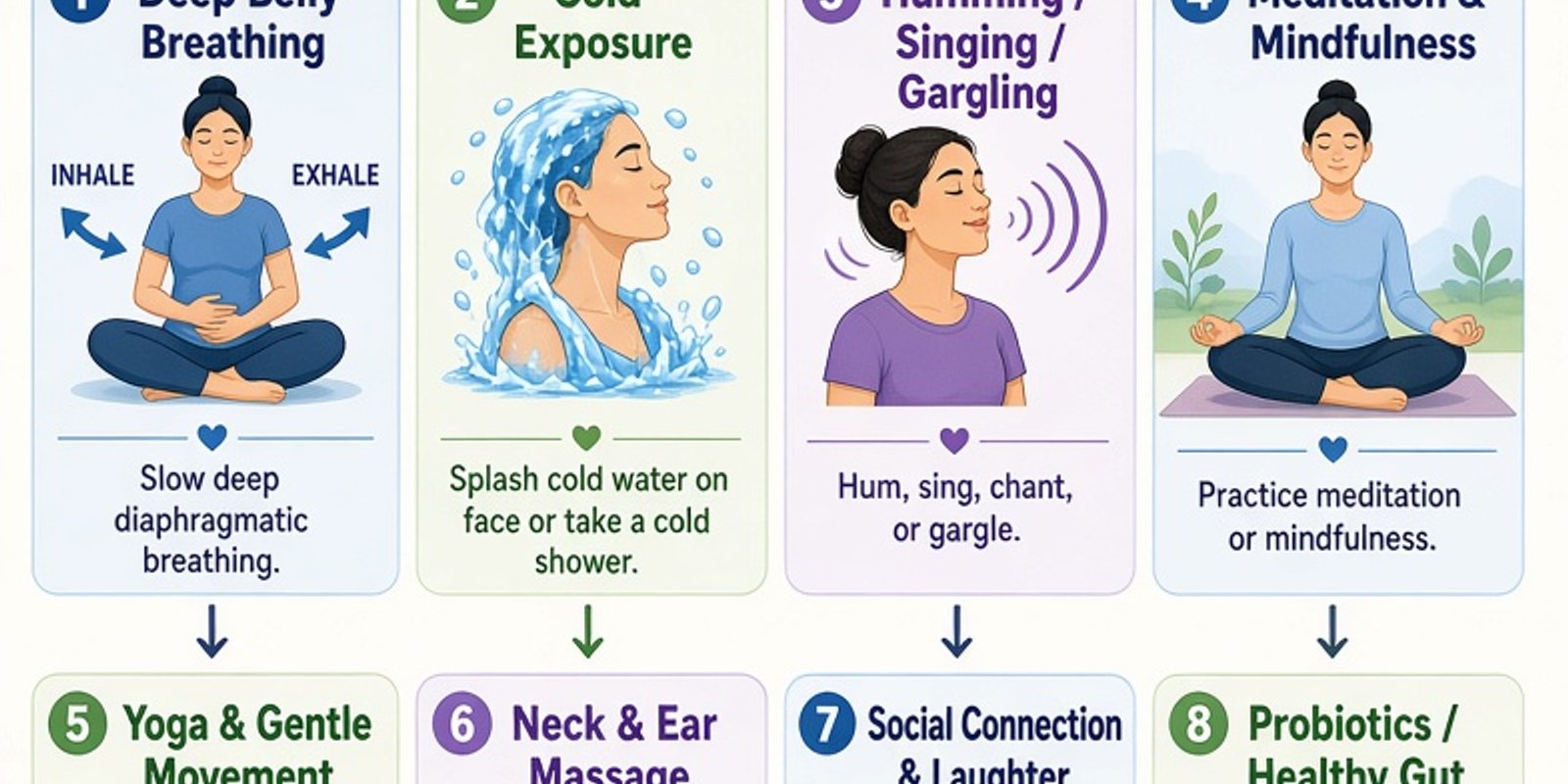
• Slow breathing: Inhale through the nose for 4 seconds, exhale for 6–8 seconds. Longer exhales quickly activate the calming response.
• Hum, sing, chant, or gargle: Vibrations in the throat and larynx stimulate the nerve. Try humming “om” or vigorous gargling for 30–60 seconds.
• Cold exposure: Splash cold water on your face, apply a cool compress, or end a shower with 15–30 seconds of cool water. This triggers the dive reflex that slows heart rate.
• Move regularly: Walking, yoga, swimming, or moderate aerobic exercise improves autonomic flexibility and vagal tone over time.
• Calm practices: Meditation, mindfulness, laughing out loud, or positive social connection further support the nerve.
Practice a few of these daily for cumulative benefits. Start small and stay consistent. If you have heart, respiratory, or other health conditions, check with a doctor first—especially before cold exposure.