

Fasting has been practiced for centuries for cultural, spiritual, and wellness reasons. Today, it has become increasingly popular as people explore ways to support metabolism, digestion, energy, and overall well-being.
But fasting isn’t simply about going without food. It’s about creating intentional periods of eating and non-eating that may give the body a different metabolic environment.
🌿 What Happens When You Fast?
After you eat, your body primarily uses available glucose for energy. As the time without food increases, insulin levels generally decrease and the body begins relying more heavily on stored energy, including fat.
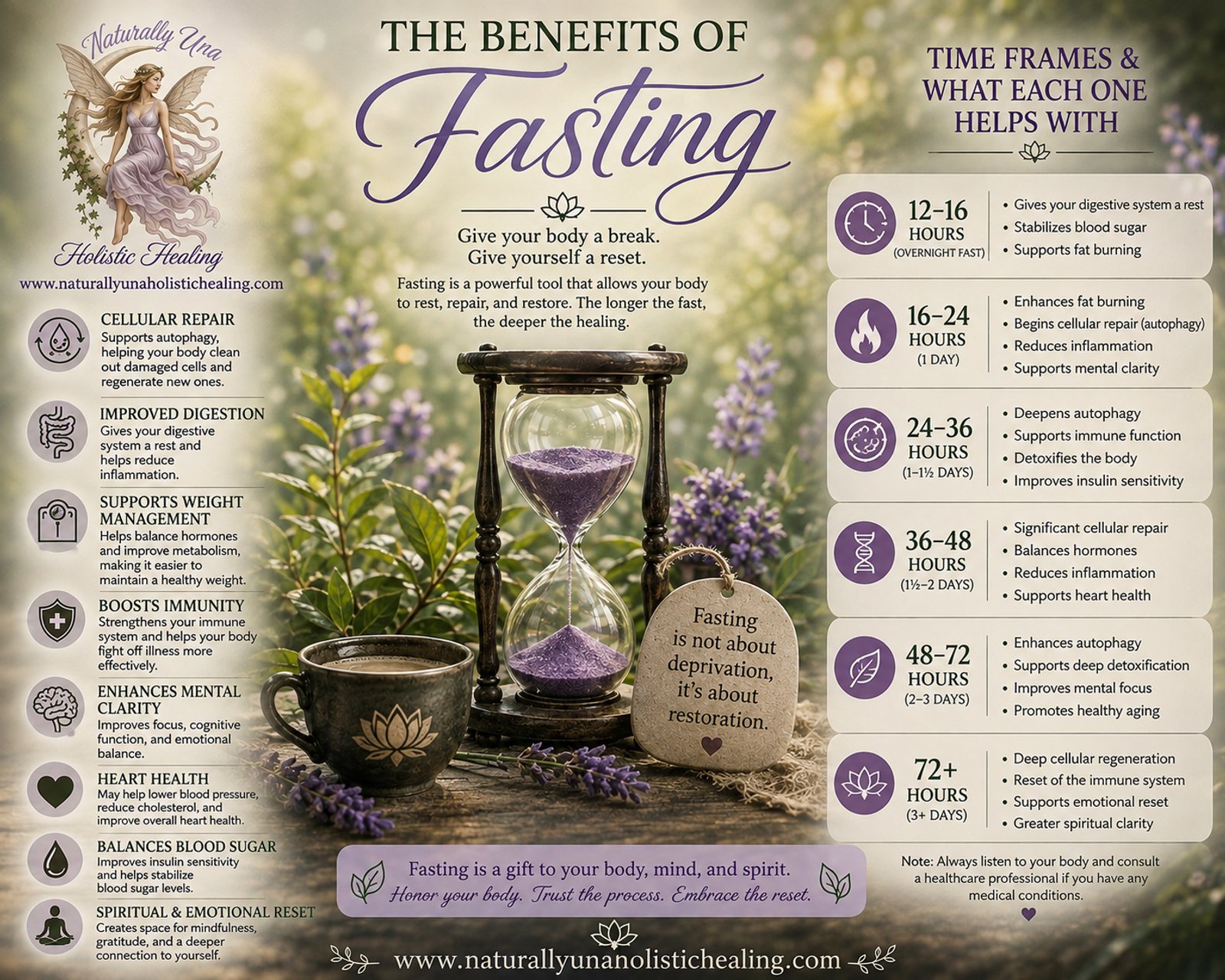
The length of a fast can make a difference in what is happening metabolically.
12–14 hours:
A gentle starting point for many people. This may help establish a consistent eating rhythm and reduce late-night snacking.
14–16 hours:
Often used as a form of intermittent fasting. Longer periods without food may increase the amount of time the body spends using stored energy.
18–24 hours:
A more advanced fasting period. Metabolic changes become more pronounced, but longer fasting isn’t necessarily better for everyone.
Beyond 24 hours:
Longer fasts require greater consideration of hydration, electrolytes, medications, nutritional needs, and individual health circumstances. They aren’t appropriate for everyone.
✨ Potential Benefits of Fasting
Research suggests that certain forms of intermittent fasting may help support:
🩸 Blood Sugar & Insulin Sensitivity
Periods without food can lower insulin exposure and may improve insulin sensitivity in some people, particularly when fasting is combined with an overall nutritious diet.
🔥 Metabolic Health
Fasting can encourage the body to use stored energy and may contribute to improvements in body weight and certain metabolic markers.
⚖️ Healthy Weight Management
For some people, restricting the hours in which they eat makes it easier to naturally reduce overall calorie intake. Fasting isn’t magic, however—the quality and amount of food eaten during eating periods still matter.
❤️ Cardiometabolic Health
Some forms of intermittent fasting have been associated with improvements in measures such as blood pressure, blood lipids, body weight, and blood sugar.
🧹 Cellular Processes
Fasting may activate cellular pathways involved in maintenance and stress resistance. Autophagy—the body’s process of breaking down and recycling damaged cellular components—is one area of scientific interest. However, the exact timing and extent of meaningful autophagy from fasting in humans is still being studied.
🌱 Digestive Rest
Taking a break from constant eating may give some people relief from the feeling of continual digestion and may help them become more aware of hunger and fullness cues.
💧 What About Hydration?
Hydration is important during fasting. Depending on the type of fast, water is generally appropriate, while some fasting approaches allow unsweetened tea or coffee.
However, fasting for extended periods can affect fluid and electrolyte balance, so longer fasts shouldn’t be approached casually.
🥑 What You Eat Still Matters
Fasting doesn’t cancel out the importance of nutrition.
When you do eat, focus on whole, nutrient-dense foods such as
🥬 Vegetables and leafy greens
🥑 Healthy fats
🫐 Fruits and berries
🥚 Quality protein
🫘 Beans and legumes
🌾 Whole grains
🌿 Herbs, spices, and minimally processed foods
Think of fasting as one part of a healthy lifestyle—not a replacement for nourishing your body.
🌙 Fasting Doesn’t Have to Be Extreme
You don’t necessarily need a 24-, 36-, or 48-hour fast to experience potential benefits. A consistent overnight fasting period—such as finishing dinner earlier and eating breakfast a little later—can be a gentler approach.
The goal isn’t to see how long you can go without eating.
The goal is to create a sustainable rhythm that supports your body rather than stresses it.
A Simple Place to Begin
Try finishing your evening meal a little earlier and avoiding late-night snacking. Allow your body to have an overnight break from food, stay hydrated, and pay attention to how you feel.
Then, rather than focusing only on the clock, pay attention to your body’s signals.
Wellness isn’t about extremes. It’s about finding balance. 🌿
If you are pregnant or breastfeeding, under 18, have a history of an eating disorder, have diabetes or another medical condition, or take medications that can be affected by food intake, talk with a healthcare professional before fasting. Prolonged fasting should be medically supervised when appropriate.
Naturally Una Holistic Healing